The Acoustic Neuroma Association has been endorsing H.R. 4606 and S. 3400, also known as Ally’s Act, since they were introduced to Congress in 2020.
Ally’s Act was reintroduced in the House on July 22, 2025, and the companion bill in the Senate was reintroduced on December 9, 2025, for the 119th session of Congress (2025-2026).
Ally’s Act are bipartisan/bicameral federal bills that will ensure private insurance companies provide coverage for bone-anchored hearing systems and cochlear implants (CI) for both children and adults from birth to age 64, including the appointments and associated costs and services that come along with these hearing devices. Private insurers often deny coverage for these systems, though they may be the only options for some individuals.
Ally’s Act would make coverage fair and consistent, and every state would benefit from the bill’s services, providing access and a better quality of life to thousands.
About Ally
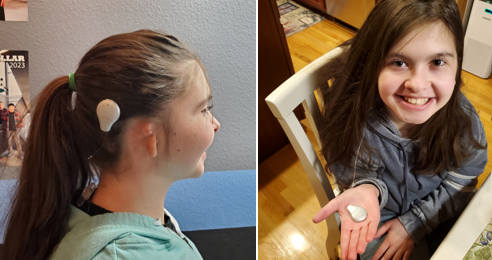
Ally is a teenager from Broomfield, Colorado. She was born without a right ear or hearing canal and requires the use of a BAHA. Following a denial for her hearing device, Ally and her mother, Melissa, formed the organization Ear Community to help advocate for insurance coverage of these hearing devices to ensure no person is left unable to hear because of a private insurance company’s refusal to cover them.
Ally’s Act would provide coverage for the following in every state:
- A BAHA or CI device
- Upgrade replacement of these hearing devices every five years
- Accessories, including soft band headbands, hard bands, and adhesives
- Device repair
- One hearing assessment per year
- One preoperative assessment per year
- Implantation surgery
- Post-operative medical appointments
- Post-operative audiological appointments for fittings, programming, and activation
- Aural services related to the use of this device
If you would like to support this bill, we encourage you to please contact your local House and Senate representatives. Visit earcommunity.org for sample templates, phone scripts, and additional information.
We sometimes hear from patients and caregivers who wonder why they aren’t receiving communications from us, only to learn that they previously unsubscribed.
In addition to our At-A-Glance newsletter and Upcoming Meetings and Events, we also share volunteer opportunities and up-to-date medical information, including research updates. If you’d like to re-subscribe, please click on the link below.
Specialty Support Groups
Support Groups by State
If you need help finding a group or are interested in starting a group, contact us.
Evaluating Pre-Treatment Vestibular Physical Therapy Rehab for Patients with Vestibular Schwannomas (VS PREHAB)
In-Person Study
Purpose
The investigators aim to estimate mean baseline and post-treatment balance scores among Vestibular Schwannomas (VS) patients undergoing pretreatment rehab (PREHAB) or no PREHAB when managed with either surgery or radiosurgery.
Study Overview
A PREHAB visit will be done once weekly for three weeks to determine exercise regimen prior to surgery or radiotherapy. Therapy includes balance exercises (twice daily), gaze stabilization exercises (12-20 minutes daily), and habituation exercises (as applicable). Standard surgical approaches including retrosigmoid, translabyrinthine, and middle fossa and radiosurgical (SRS) delivery will be determined based on current VS management guidelines and followed by study randomization to PREHAB.
Eligibility Criteria
- Provision of signed and dated informed consent form
- Male or female participants ≥18 years of age.
- Initial diagnosis of a Vestibular Schwannoma confirmed by a physician with an internal auditory canal (IAC) MRI, in accordance with standard or institutional practice
- VS patients who present with a tumor size ≤2.5 cm and will be treated with surgery or SRS
- Eastern Cooperative Oncology Group (ECOG) Performance Status <2
- Within 14 days of study registration, participants must have normal laboratory values that support safe treatment, at the discretion of the treating investigator
- Be willing to adhere to outlined study protocol criteria and complete self-reported questionnaires (translations may be made available if the patient' primary language is not English).
- For females of reproductive potential: must have a negative urine or serum pregnancy test 7 prior to enrollment and agreement to use of highly effective contraception method during study participation and for an additional 24 weeks after the completion of stereotactic radiosurgery.
Location:
Froedtert Hospital, Medical College of Wisconsin
Milwaukee, WI, USA
Contact:
Michael Harris, MD
Medical College of Wisconsin
Email: msharris@mcw.edu
For more information:
https://clinicaltrials.gov/study/NCT05702749?term=vestibular%20prehab&rank=1#study-overview
Update My Information
The ANA is dedicated to empowering patients to take an active role in their care by creating impactful programs, funding research, and collaborating with top medical centers and leading healthcare providers - supporting you along every step of your AN journey.
Our commitment includes a robust lineup of support group meetings, webinars, and educational events, plus our quarterly NOTES newsletter, featuring insights on treatment options, regrowth, hearing and balance issues, managing headaches, and navigating the “Watch and Wait” approach.
Please take a moment to ensure we have your most up-to-date information, so you’ll have access to these critical resources.